

Exports to top three markets decline in line with wine consumption trends
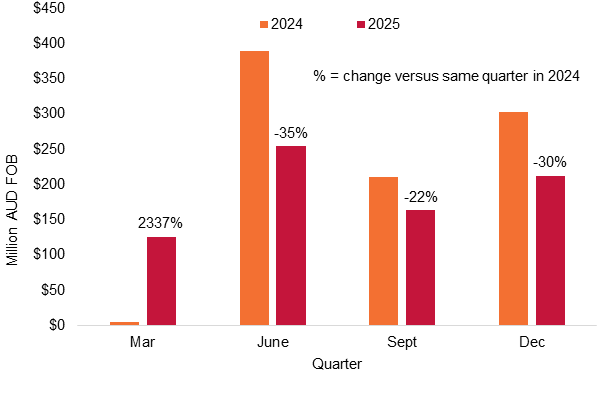
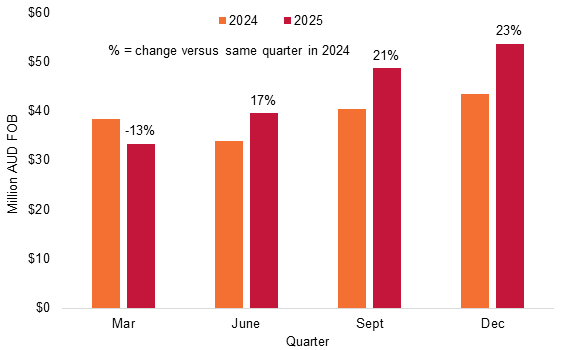
Exports to mainland China had the biggest impact on the decline in value, as shipments to the market were down by 17 per cent year-on-year to $755 million. The year-on-year decline was a result of three consecutive quarters with lower value than the same quarter in 2024 (see Figure 1). The figures represent a normalising of shipment levels after the initial re-stocking period into the market. Chinese consumers are being cautious with their spending, including on alcohol, and are therefore not consuming as much wine as they did prior to the imposition of import tariffs on Australian bottled wine. According to the National Bureau of Statistics of China, consumer confidence was around 90 at the end of 2025, down from levels around 120 pre-COVID-19 and only up slightly from the all-time low of 86 during COVID-19 era lockdowns[1]. The Chinese wine market is one third of the size it was five years ago – impacting both domestically produced and imported wines.
Figure 1: Value of exports to mainland China by quarter
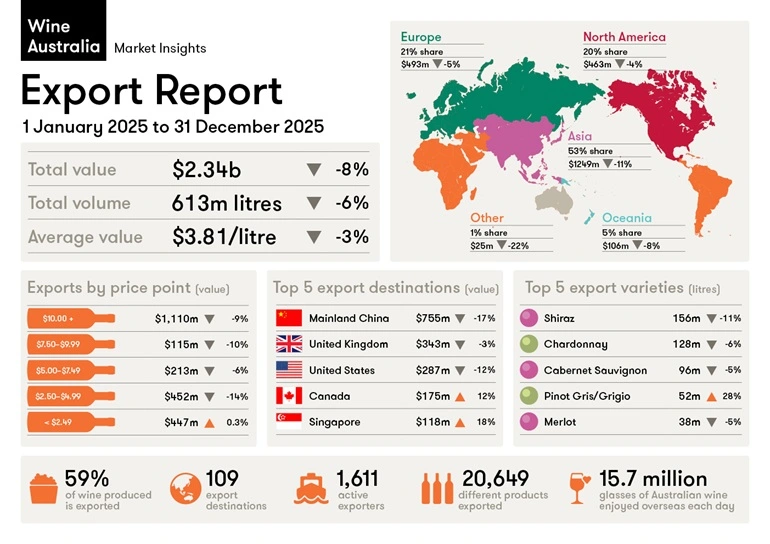
More than 50 per cent of the volume of Australian wine exports go to the UK and the US. These two wine markets are facing very tough headwinds, including changing consumer habits with preferences away from wine drinking occasions and increased cost-of-living. According to the latest Circana and SipSource sales data from these markets, overall wine sales in the UK off-premise declined by 4 per cent in the past 12 months[2], while wine depletions in the US declined by 8 per cent[3]. This marked the fifth year of declines in the US wine market and the first time in two decades that total wine sales fell below 300 million cases, according to Impact Databank. Export value of Australian wine to the UK and US declined by 3 and 12 per cent respectively in 2025.
However, a small bright spot has emerged in the UK, with packaged exports valued above $7.50 per litre growing by 15 per cent in volume. The growth was spread across many of the key varieties – including Shiraz, Cabernet Sauvignon, Chardonnay, Grenache and Sauvignon Blanc.
Exports to mainland China shift towards white wines
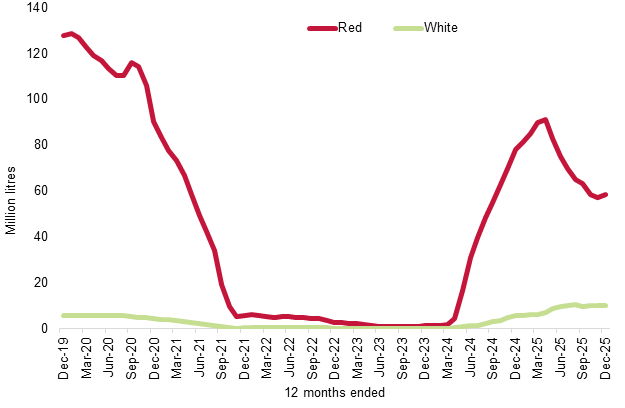
There were very different performances by colour in exports to mainland China in the past 12 months(see Figure 2).Red wine exports declined by 25 per cent in volume to 58 million litres – decreasing from a 93 per cent share of exports in 2024 to 85 per cent. Meanwhile, exports of white wine grew by 77 per cent to 10 million litres, increasing to a 15 per cent share of export volume from 7 per cent. The top three varieties in white wine exports – Chardonnay, Sauvignon Blanc, and Riesling – all grew. The increase in white wine shipments was also spread across the price spectrum from lower to higher end wines. This is consistent with market trends in mainland China, where consumption occasions are moving from business dinners to more casual occasions where white wine is more suitable, according to IWSR. Sparkling and carbonated exports also increased in volume.
Figure 2: Volume of red and white wine exports to mainland China
Most Asian destinations grow
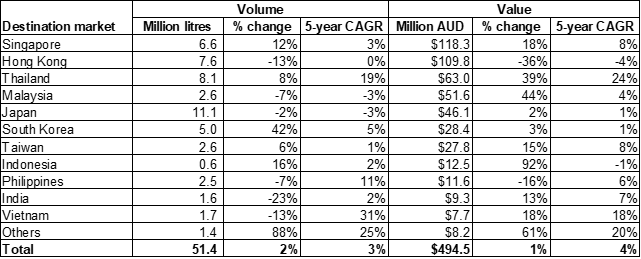
The Asian region, excluding mainland China, increased by 1 per cent in value to $494 million and 2 per cent in volume to 51 million litres in the 12 months to December 2025. Shipments to Singapore increased by 18 per cent in value to reach $118 million, overtaking Hong Kong for the first time since the 12 months to September 2020. The value of shipments to Hong Kong declined by 36 per cent, reaching the lowest level since late 2020. It should be noted that both markets are trading hubs in the region, therefore some of the wine shipped to these locations is re-exported to other markets. Export performance to these hubs can vary widely depending on business decisions by exporters to ship via a hub or direct to market.
Value growth was widespread amongst the other Asian destinations (see Figure 3), with the largest increases coming from Thailand, Malaysia, Indonesia, and Taiwan. The important Northeast Asian markets of Japan and South Korea also grew at slightly lower rates.
Figure 3: Exports to Asia by destination market (excluding mainland China)
Exports to Canada grow in value
Australian wine exports to Canada increased by 12 per cent in value to $175 million and declined by 2 per cent in volume to 64 million litres.
The increase in value was driven by a 15 per cent increase in packaged exports to Canada, with growth coming from across the price spectrum. This growth started in the second quarter of the year and continued through quarter four(see Figure 4. Many Australian brands in the Canadian market are experiencing increased sales, following the removal of American wines across Canada in response to US tariffs on Canadian products. According to the latest 2025 data from the Canadian liquor boards, Australian wine sales have increased by 24 per cent in Ontario,8 per cent in British Columbia, and 2 per cent in Québec when comparing to the previous year.
Figure 4:Value of exports to Canada by quarter
For more detailed analysis, please read the full Export Report.
To access more detailed data, please visit the Export Dashboard.
Read the full Export Report Visit the Export Dashboard
Dashboards and calculators
-
Dashboard or calculator
Grape Price Indicators Dashboard
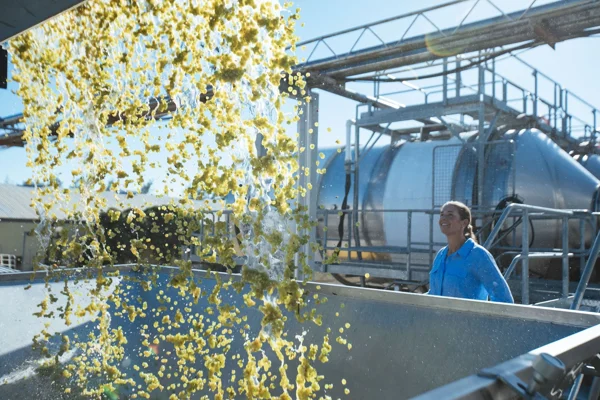
The Wine Australia Grape Price Indicators Dashboard is a free online tool that provides a current summary of the key drivers of winegrape prices in Australian inland regions. It brings together key market indicators to help you understand supply and demand for wine and grapes and provides an indication of the expected direction of grape prices ahead of the next vintage.
-
Dashboard or calculator
Grape Growing Cost Calculator
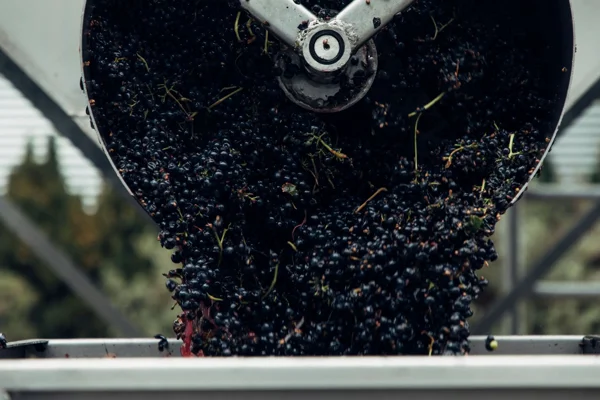
A simple online calculator that allows you to estimate the costs of winegrape growing in any of the inland regions of Australia: Riverina, Riverland, and Murray Darling-Swan Hill.
-
Dashboard or calculator

Wine Geographical Indications Dashboard
An interactive map that allows you to explore Australia’s wine geographical indications (wine regions), look up statistics about each region, view vineyard locations and print maps.
-
Dashboard or calculator

Vintage Survey Dashboard
This is your one-stop-shop for Australia’s vintage crush data from 2015 to the latest report.
-
Dashboard or calculator

Export Dashboard
Comprehensive data on Australian wine exports back to 2010 including market, container type, wine style, GI and variety label claim and price segment.
-
Dashboard or calculator

Domestic Sales Dashboard
Provides high-level statistics on the Australian domestic market, including retail sales, wholesale winery sales, on-premise and consumer insights.
-
Dashboard or calculator

Free on Board (FOB) to Retail Calculator
The FOB to Retail Calculator can help you test pricing, compare your potential retail price point with competitors and explore the effect of different exchange rates to support more informed export pricing decisions.
-
Dashboard or calculator

Market Explorer
Explore wine consumption statistics, trends, and key economic indicators for the top 40 most attractive wine markets