

Overview
The report provides substantial background data on the performance of key cultivars — Shiraz, Chardonnay, Semillon, Riesling, Sangiovese, Merlot, Cabernet Sauvignon, Verdelho and Grenache — with particular focus on isohydric versus anisohydric behaviour under water stress. Findings show Grenache (isohydric) generally outperformed anisohydric varieties such as Cabernet Sauvignon and Merlot under stress, and that irrigation regime can shift Cabernet Sauvignon toward more isohydric responses. More recent research extends knowledge and management techniques on this subject; readers are directed to other Wine Australia resources for the latest findings.
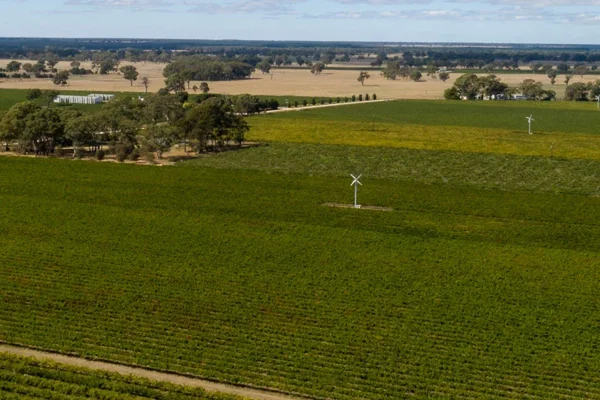
The performance of vines in the field is driven by a range of morphological and physiological characteristics which are determined by the genetic background of individual varieties. We have assessed a number of grape varieties for their response to changes in their environment. Most tests were carried out in the field on nine varieties growing at one location under uniform conditions and these varieties included many of those more commonly grown in Australia.
While the variety mix could not be exhaustive, it did represent over 77% (on an area basis) of the major wine grape varieties currently grown in Australia. Where necessary field tests were supplemented by experiments in an air-conditioned glasshouse. In order to assess varietal response to environmental challenges we subjected the vines to a number of tests ranging from simply measuring the rate at which water is lost from excised leaves to more complex measurements to assess the performance of vines over a whole season such as carbon isotope discrimination. These tests allowed a ranking of varieties in terms of their ability to perform in the face of challenges imposed by the weather and by exposure to soil water deficit. Grenache, which is generally considered to exhibit isohydric characters, was a consistently strong performer in most of the tests while Cabernet Sauvignon and Merlot, examples of vines exhibiting more anisohydric characters, generally performed poorly when exposed to stressful conditions. However, all varieties were capable of good performance in an environment which posed no challenges.
Abstract
Tests designed to probe the short and long term response of different varieties of grapevine to increased evaporative demand or soil moisture deficit allowed the varieties to be broadly classified as showing either isohydric or anisohydric characteristics.
Downloads
Categories