


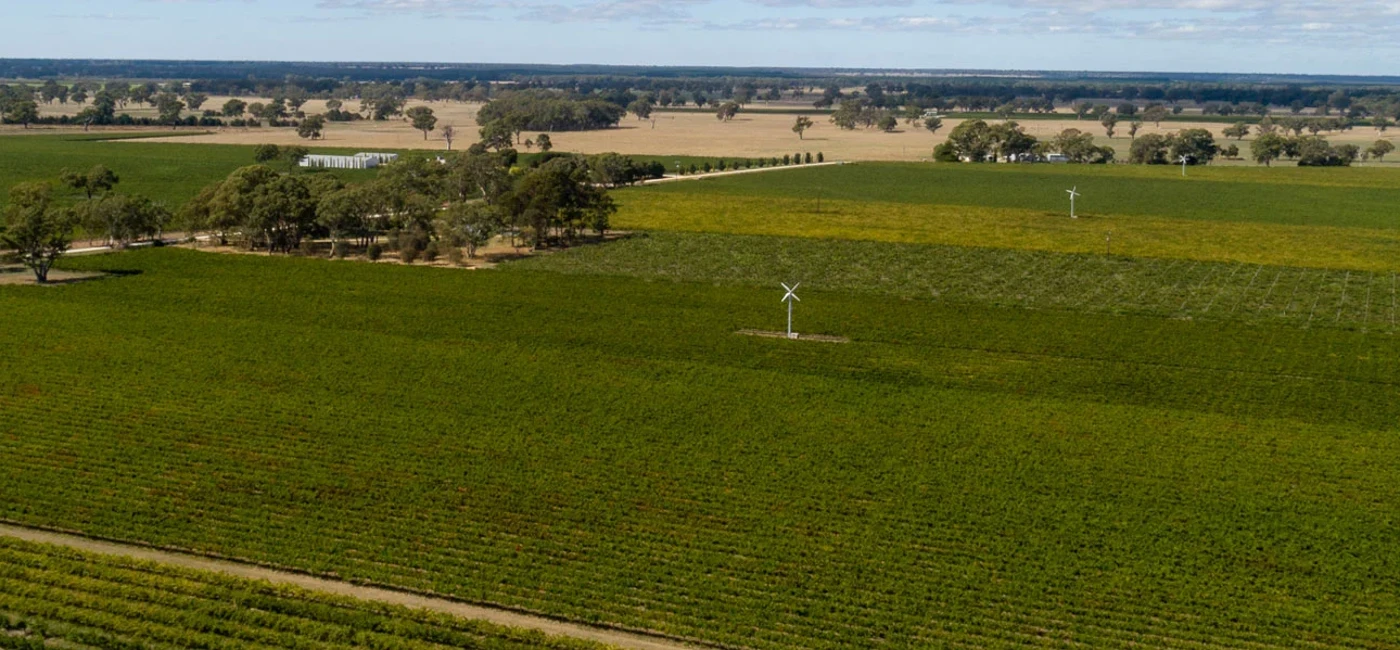
Using data-driven irrigation schedules has been shown to increase water use efficiency three-to-six-fold in Cabernet crops – and double in Shiraz – compared to convention methods.
The recently completed project, supported by Wine Australia, found data-driven irrigated vines consistently outperformed conventionally irrigated vines.
Even when irrigation was reduced in the data-driven group, no significant impacts to yield or grape composition parameters were observed.
The findings are important, because increasing the efficiency of irrigation water use to maximise yield and/or quality is a key strategy to addressing surging energy prices and ageing irrigation infrastructure.
The research team, led by Dr Vinay Pagay from the University of Adelaide, evaluated the benefits of implementing irrigation schedules on Cabernet Sauvignon and Shiraz grapevines in the Coonawarra region based on non-data-driven and data-driven metrics. The metrics included crop evapotranspiration, soil moisture thresholds and two plant-based water status thresholds.
Two new commercial continuous water status sensors were tested as part of the trial – microtensiometers (Florapulse) and TranspIR (Athena IR-Tech).
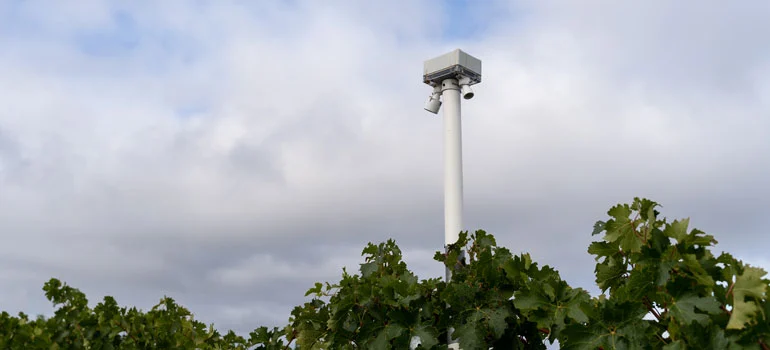
The sensors were shown to correlate strongly with conventional vine water status metrics, such as stem water potential and stomatal conductance.
Spatial variations in water status and canopy performance were also measured using high resolution remote sensing from unmanned aerial vehicles (UAVs).
“Together, these techniques have the potential to increase water use efficiency in grapevine and other crops that are similarly irrigated,” Dr Pagay said.
Despite inter-annual variations in the results that were attributed to seasonal weather conditions, the team observed three-to six-fold increases in water use efficiency based on data-driven methods compared to the conventional (non-data driven) method in Cabernet Sauvignon, and a doubling of water use efficiency in Shiraz.

The team concluded that irrigation strategies based on data-driven techniques enabled water savings without compromising vine physiological performance, yield or grape composition.
“Managing irrigation based on data can greatly benefit water use efficiency, without sacrificing grape/wine quality,” said Dr Pagay.
Dr Pagay said the use of continuous crop water status sensors provided near real-time (or daily) data to inform the temporal management of irrigation to achieve greater efficiencies in water management in Australian vineyards.
“Our results indicated that using data-driven approaches was generally superior to non-data-driven methods, and that water use efficiency could be enhanced, particularly when using metrics that were associated with the vine itself,” Dr Pagay said.


