

Northern hemisphere
France and Spain both had smaller crops in 2025 than in 2024 and well below their five-year averages, due to high climatic variability compounded by demand-driven adjustments. France had its smallest vintage since 1957, due to a combination of prolonged heat and drought, as well as a significant amount of government-subsidised vineyard restructuring and removals in the past two years. Spain experienced its third consecutive year of drought, as well as extreme weather events including heatwaves and hailstorms, resulting in the second-smallest vintage in the past 30 years.
Conversely, Italy had a 7 per cent year-on-year increase, producing a harvest slightly above its 5-year average – the only major producer in the northern hemisphere to do so –driven by favourable weather conditions. It was the largest wine-producing country in the world in 2025 by a significant margin, increasing its share from 16 per cent in 2023 to over 20 per cent in 2025. The US saw a slight increase year-on-year but remained below its five-year average, with the smaller crop widely attributed to vine removals and restricted intake, according to Ciatti. Figure 1 shows the changes in wine production for the largest global wine-producing countries.
Figure 1: Change in wine production by country in 2025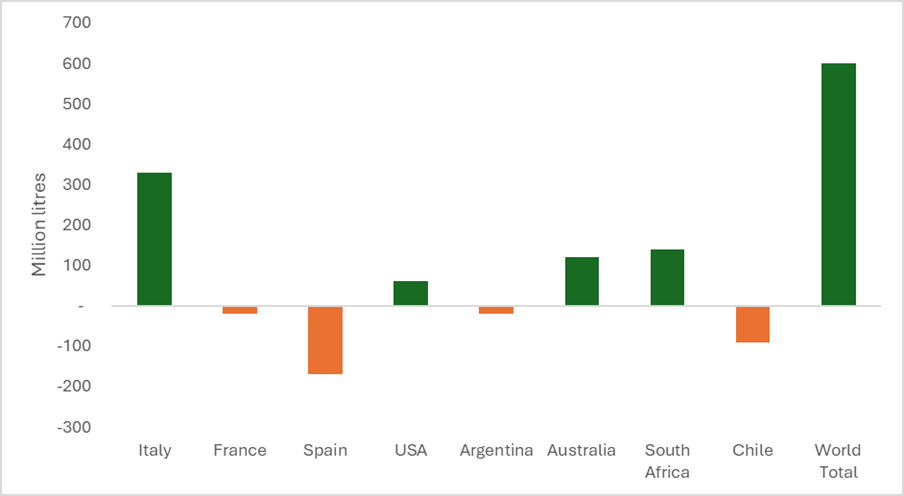
Source: OIV and Wine Australia
Southern hemisphere
Overall, the southern hemisphere harvest increased by 7 per cent in 2025, driven by increases in Australia (up 11 per cent), South Africa (up 16 per cent) and New Zealand (up 32 per cent). Conversely, Chile and Argentina both saw declines. Despite the increase, all the major southern hemisphere producers were below their five-year average wine production except South Africa and New Zealand (see Figure 1).
Scarcity of water, significant stock overhangs and financial constraints on growers and winemakers were major factors contributing to Argentina’s small production according to Ciatti, while Chile has seen significant vine removals in the past few years. South Africa saw a recovery from two low vintages to be close to its five-year average, after near-ideal seasonal conditions, while New Zealand’s production was the second-largest on record, primarily driven by significant new plantings coming on stream. The area of vineyard in New Zealand has increased by 17 per cent since 2016, according to the NZ Winegrowers’ Annual Report 2025 (see figure 2).
Figure 2: Area of vineyard in New Zealand 2016–2025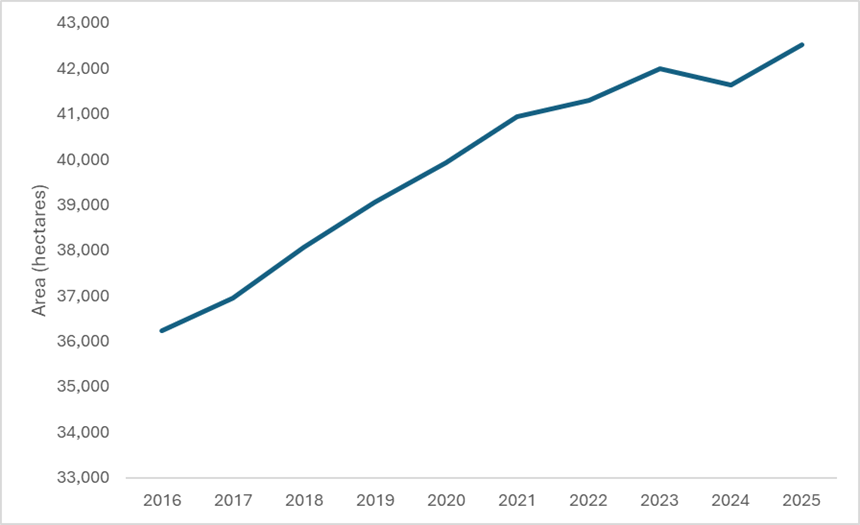 Source: New Zealand Winegrowers
Global demand trends
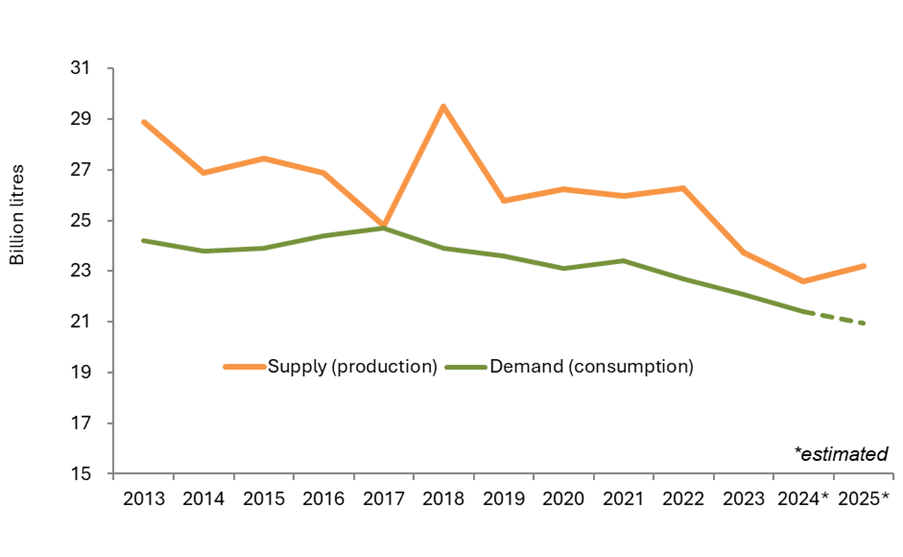
Global wine consumption has been declining over the same time period, driven by changing consumer preferences and demographics exacerbated by geopolitical uncertainty and cost of living pressures in many countries.
Added to the reduction in underlying demand has been the accumulation of excess carryover stocks in many countries at both the wine producer and the retailer level, further softening the market. This means that, despite the fairly sudden recent drop in supply, it still exceeded consumption by an average of 7 per cent in the past three years, continuing the trend of exceeding consumption by an average of over 10 per cent every year since (and including) 2018 (Figure 3).
Figure 3: Global wine production and consumption over time
 Source: OIV, IWSR and Wine Australia
Dashboards and calculators
-
Dashboard or calculator
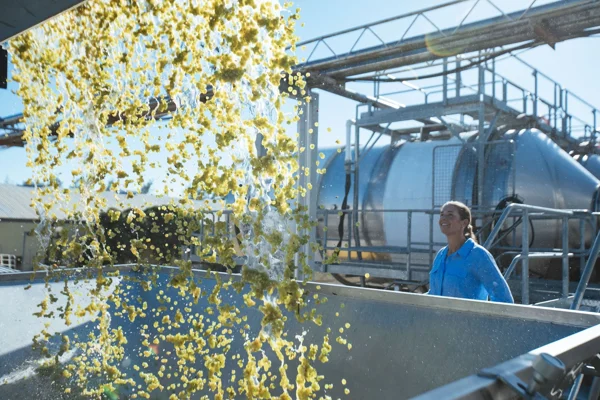
Grape Price Indicators Dashboard
The Wine Australia Grape Price Indicators Dashboard is a free online tool that provides a current summary of the key drivers of winegrape prices in Australian inland regions. It brings together key market indicators to help you understand supply and demand for wine and grapes and provides an indication of the expected direction of grape prices ahead of the next vintage.
-
Dashboard or calculator
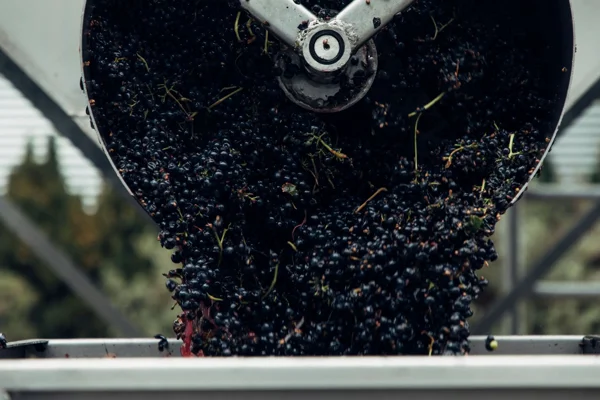
Grape Growing Cost Calculator
A simple online calculator that allows you to estimate the costs of winegrape growing in any of the inland regions of Australia: Riverina, Riverland, and Murray Darling-Swan Hill.
-
Dashboard or calculator
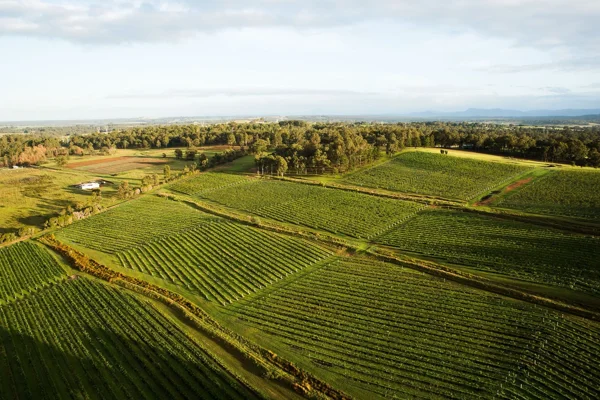
Wine Geographical Indications Dashboard
An interactive map that allows you to explore Australia’s wine geographical indications (wine regions), look up statistics about each region, view vineyard locations and print maps.
-
Dashboard or calculator

Vintage Survey Dashboard
This is your one-stop-shop for Australia’s vintage crush data from 2015 to the latest report.
-
Dashboard or calculator
Export Dashboard
Comprehensive data on Australian wine exports back to 2010 including market, container type, wine style, GI and variety label claim and price segment.
-
Dashboard or calculator

Domestic Sales Dashboard
Provides high-level statistics on the Australian domestic market, including retail sales, wholesale winery sales, on-premise and consumer insights.
-
Dashboard or calculator

Free on Board (FOB) to Retail Calculator
The FOB to Retail Calculator can help you test pricing, compare your potential retail price point with competitors and explore the effect of different exchange rates to support more informed export pricing decisions.
-
Dashboard or calculator

Market Explorer
Explore wine consumption statistics, trends, and key economic indicators for the top 40 most attractive wine markets