


It has been widely reported that global wine consumption is now at the lowest level since 1961. According to IWSR, in the five years to 2024, global consumption fell by 3.5 billion litres and is forecast to decline by another 1.5 billion litres by 2029.
The volume of wine consumption is falling due to a smaller population of wine drinkers who are drinking less than previous generations. While recent cost of living pressures has contributed to the decline, one major factor is the increasing focus on wellness which has seen consumers moderate their alcohol consumption. This is not a cyclical event but a fundamental shift in consumer behaviour.
This bulletin examines the increasing focus on wellness and how this is impacting on global wine consumption.
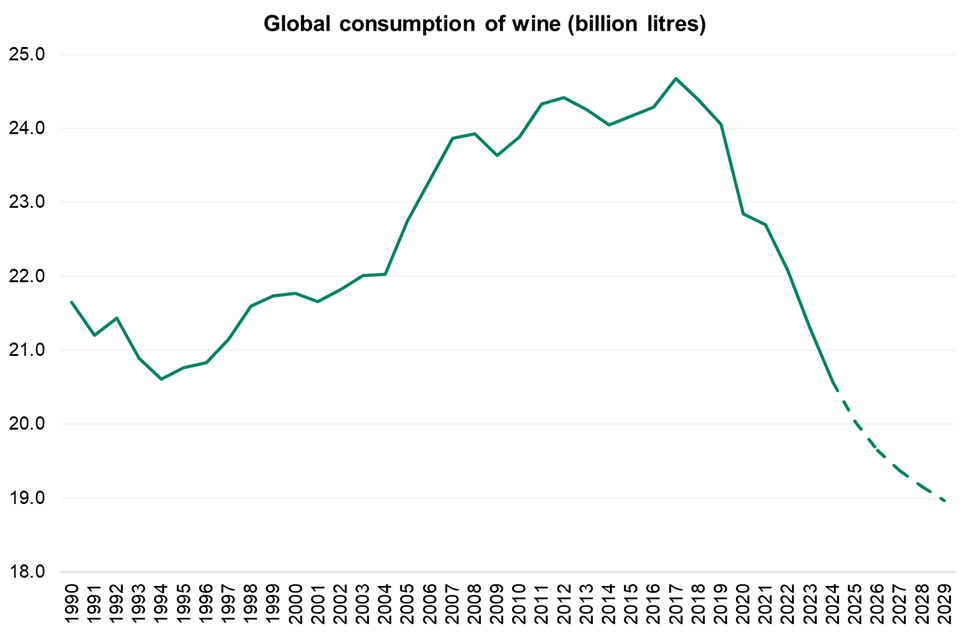
Source: IWSR
The rise in wellness culture
Wellness culture is a lifestyle cultural change that emphasises holistic well-being, including physical, mental, emotional, and spiritual health.
While it was a growing trend prior to 2019, the COVID-19 pandemic encouraged a surge of people to re-assessing their health priorities and there was increased interest around immunity, stress reduction, and home-based wellness routines.
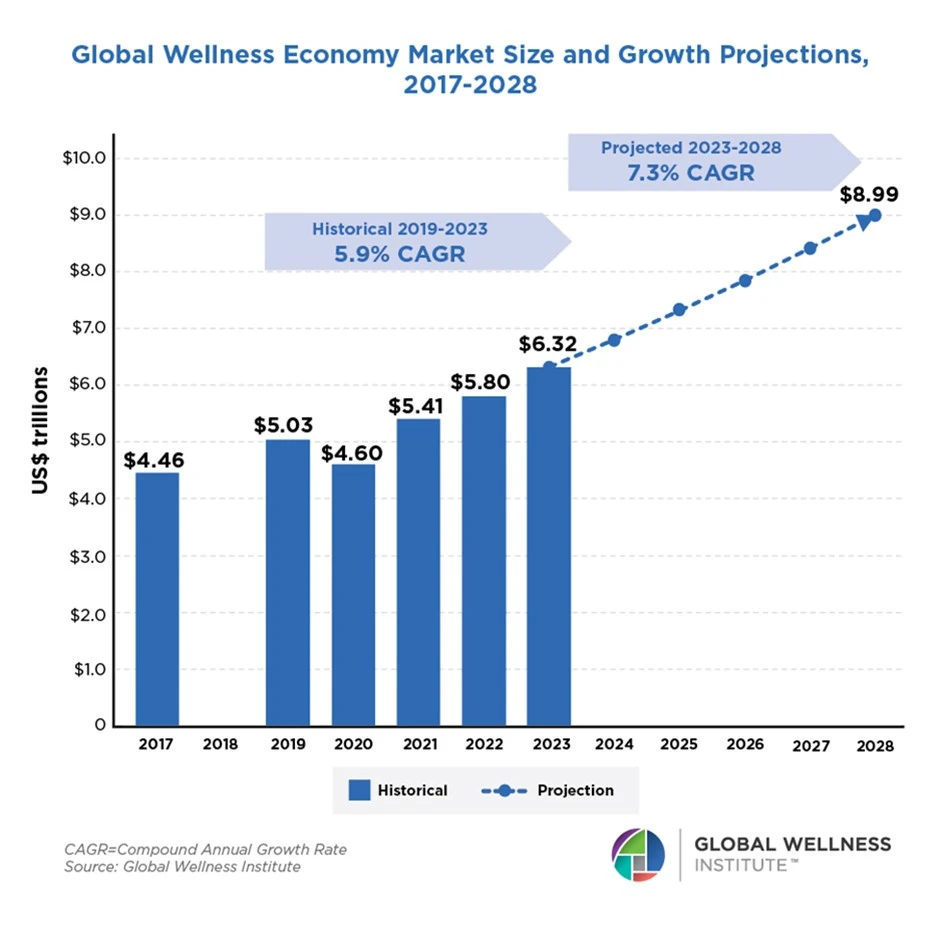
The focus on wellness has continued to grow in the years after the pandemic. Research from the Global Wellness Institute shows the global spend on wellness, encompassing products, services and treatments, reached a record $US6.3 trillion in 2023. This makes the wellness economy larger in size than the green economy, IT, and sports.
Sectors like fitness, nutrition, mental health, and workplace wellness are booming. The Global Wellness Institute has forecast that the wellness economy will grow to nearly $US9.0 trillion by 2028, almost double its size in 2020.
This rapid growth shows how wellness, which was once viewed as a luxury, is becoming a bigger part of everyday life across all generations. Millennials and Gen Z treat wellness as a daily lifestyle, not an occasional indulgence. While older generations are investing in healthy ageing, longevity, and preventive care.
How wellness is changing occasion
The wellness culture is reshaping how people think about wine and influencing drinking habits. This includes what and how much is consumed as well as the occasions when wine has traditionally been consumed.
More people are exploring and movements like Dry January are gaining increasing traction, especially among younger consumers. The social stigmas and cultural barriers around drinking less alcohol have been broken down.
The growing wellness culture is also radically reshaping social life, from how we gather, to what we consume, and how we connect. There are noticeably fewer wine-drinking occasions today, and it’s not just about people drinking less. It’s about how, when, and why they choose to drink at all.
Perceived traditional wine moments like dinner parties, celebrations, or winding down after work, are being replaced by wellness-oriented activities such as yoga sessions or early morning hikes.
At home, people are drinking wine less often. And while this is partly due to the moderation trend, importantly it is also because there are less wine drinking occasions at home such as nightly family dinners.
How wellness is changing product interest
The rise in the wellness culture has seen a surge in demand for functional beverages that cater to consumers who seek more than just hydration from their drinks. These beverages are specifically formulated with ingredients that offer additional health benefits, such as boosting energy, improving digestion, relieving stress or supporting the immune system. The thirst for functional beverages has seen strong growth in products such as energy drinks, sports drinks, vitamin and botanical infused waters, and fermented drinks such as kombucha.
As consumers become more health-conscious and focused on well-being, there is a growing demand for wines that allow them to enjoy the experience of drinking wine while moderating their alcohol intake. This has resulted in growth in the consumption of no and low alcohol (NOLO) wines with NOLO being one of the few wine categories to record solid growth in recent years.
IWSR is forecasting consumption of low alcohol wines to overtake no alcohol wines by 2028, with low alcohol wine consumption forecast to grow by 14 per cent per annum over the period, compared to 7 per cent per annum for no alcohol wines.


