

A growing body of research demonstrates that planting undervine cover crops to reduce weeds can benefit soil health and possibly soil temperature – but the practice can be challenging in warmer and drier conditions.
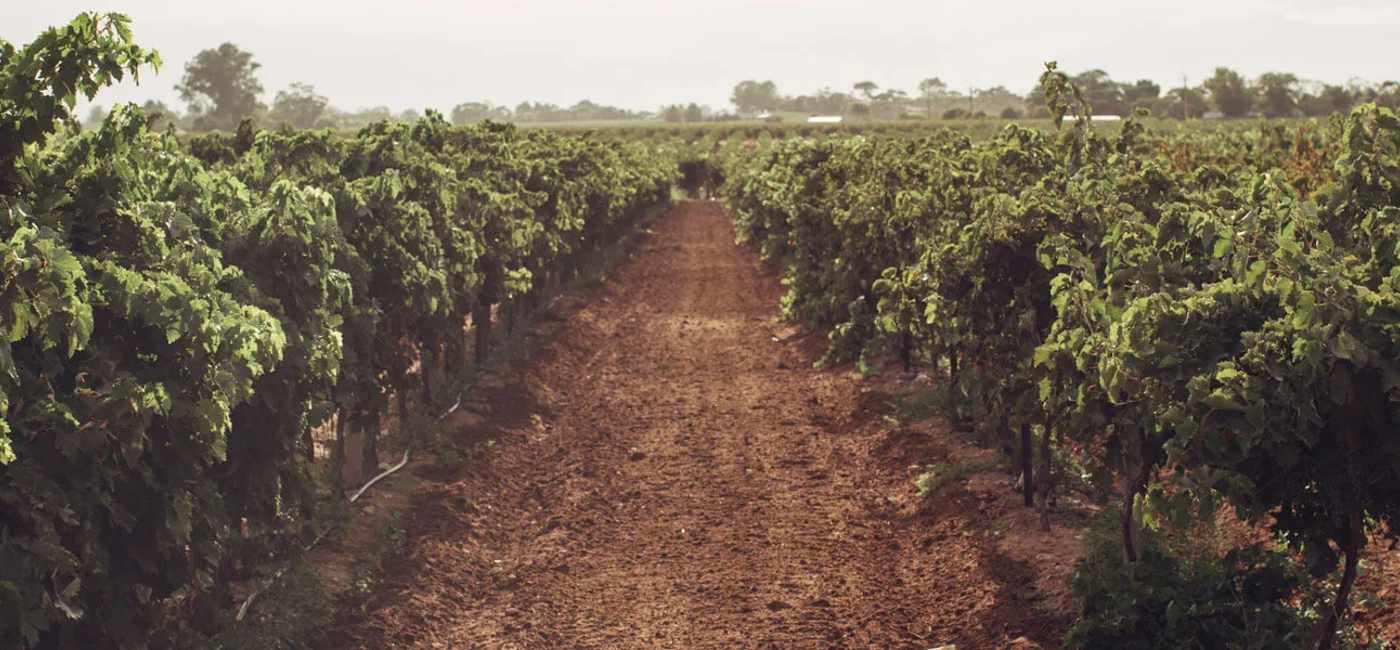
Now, a new research project in the Riverland is investigating the practice as a non-chemical weed management option for warmer and drier regions.
Recent research by University of Adelaide Postdoctoral Research Fellow Dr Thomas Lines and colleagues showed that growing ground covers under vines can not only help improve soil health, but might reduce soil temperatures too – and could be a sustainable alternative to the current practice of spraying herbicides to maintain a bare, weed-free strip.

However, Dr Lines acknowledges that establishing cover-crop plant species in vineyards with the lower rainfall environments that are found in inland wine regions of Australia can be challenging.
Dr Lines’s current project, in collaboration and consultation with Riverland local growers’ groups, aims to test the effectiveness of a number of herbicide-free undervine weed management methods in inland areas. Work will focus on improving soil health, increasing resilience in the face of a warming climate, and preparing growers for a future where a number of herbicides may not be available due to increased regulation.
“The broad goal of the project is to better understand how to effectively reduce herbicide inputs in warmer climate wine regions. This is extremely difficult, as the higher temperatures and ample water supplied to the vines also provides ideal conditions for weed populations to grow excessively if not controlled,” Dr Lines said.
Dr Lines said the challenge of maintaining profitability without impacting on soil health was often seen as insurmountable in warmer regions.

“As an industry, given increased regulation of herbicides, and new data on the benefits of improving soil health (biodiversity, carbon) via the use of ground cover, we need to understand how to reduce herbicide use in the highest yielding regions of the country,” he said.
Dr Lines said the research team hoped to help growers better understand how best to use ground covers, without compromising on productivity or profitability.
“To do this we are trialling a number of methods of generating ground cover and undervine cover. By incorporating mechanical weeding methods, we will also gain insight into how these methods affect soil health and vine physiology.”

He said if the project was able to successfully reduce herbicide use and improve sustainability, it had the capacity for large and meaningful change to the sector as a whole.
“The cover crop space is very exciting and fast moving. We look forward to seeing what happens next.”
Soil health – plan and practice for successDr Lines said it was important for growers to make a plan to improve their soil health, “or at a minimum to take an interest in how their current practice affects the health of their soils.” “Improving your soil requires some courage and a shift in thinking, but the long-term benefits can be well worth the effort. I recommend growers practice on half a block and learn how things work in their individual microclimate.” See more information here and visit the Cover Crop finder to find cover crops suitable for use in Australian vineyards. |